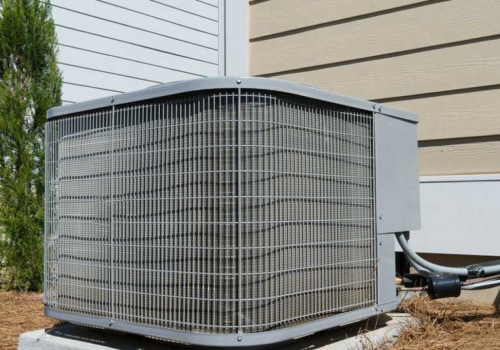
Don’t take your indoor air for granted just because your house never had ductwork. The U.S. Energy Information Administration found that only 61% of New Jersey homes use central air, which leaves roughly two in five getting by on window units, mini splits, radiators, and an open window.
If you live in one of them, the usual advice to upgrade your HVAC filter doesn’t apply. You can still keep air quality in New Jersey homes without ducts under control, one room at a time, by watching the AQI, filtering the rooms you use most, keeping moisture down, and testing for the one gas no filter will catch.
TL;DR Quick Answers
air quality New Jersey
Air quality in New Jersey rises and falls with two outdoor drivers, summer ozone and drifting Canadian wildfire smoke, and both find their way indoors. Check the daily AQI before you open windows. If your home is one of roughly two in five without central air, a HEPA air cleaner does the filtering a ducted system would.
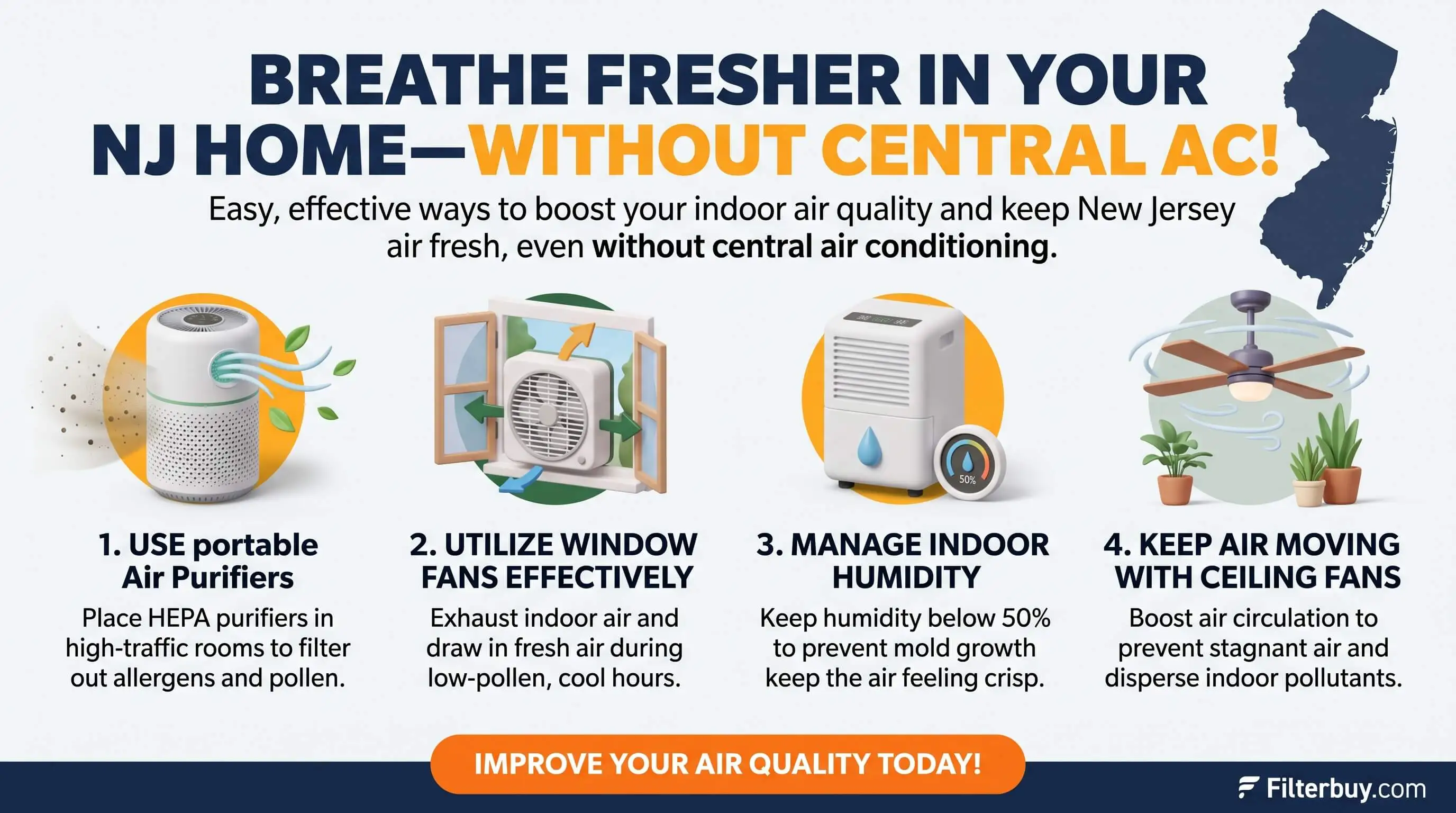
Check the AQI first: Open windows below 100, close them above it, and recheck on summer afternoons when ozone peaks.
Get free alerts: NJDEP’s EnviroFlash sends email and text warnings before a bad air day starts.
Filter the bedroom first: Match a HEPA cleaner’s CADR to the room, or set up an EPA-tested MERV 13 box fan on smoke days.
Control moisture: Keep indoor humidity between 30 and 50 percent to discourage mold and dust mites.
Test for radon: New Jersey recommends testing every home and taking action at 4 pCi/L or higher.
Top Takeaways
Window units handle cooling. Their mesh filters let fine particles straight through.
The AQI decides when windows open. Keep them open below 100, shut them above it, and recheck on summer afternoons.
CADR tells you which cleaner fits. Match it to the room, and pass on models that make ozone.
A box fan can cover smoke days. Pair a 2012-or-newer fan with a MERV 8 filter and a cardboard shroud.
Humidity and radon each need their own plan. Aim for 30 to 50 percent humidity, and test every home for radon.
Why No Ducts Changes the Plan
Here’s something that might surprise you: the filter inside a window unit was built to protect the machine, and your lungs come second. A central system pulls air from every room through one filter. Window units, wall units, and ductless mini splits mostly use washable mesh screens that keep lint and large dust off the coil, and fine particles like PM2.5 from smoke and traffic slip right through.
New Jersey gives those particles plenty of chances. Parts of the state’s northern and southern regions still fall short of the federal ozone standard, and Canadian wildfire smoke has drifted in during recent summers. Both get inside through open windows and everyday gaps.
Check Air Quality in New Jersey Before You Open a Window
The Air Quality Index converts pollution readings into a 0 to 500 scale with six color bands, from green for Good up to maroon for Hazardous. The rule I’d give any family is simple. Keep windows open while the AQI sits below 100, and shut them once it climbs past that.
New Jersey’s two biggest air problems keep different hours. Ozone builds on hot, still afternoons, so a clear morning can turn orange by 3 p.m., while smoke arrives whenever the wind brings it. NJDEP’s AQI Today page posts daily forecasts and free EnviroFlash email and text alerts, so you hear about a bad air day before it starts.
Choose a Portable Air Cleaner That Fits the Room
Read the CADR Label First
With no ducts doing the filtering, a portable air cleaner takes over the job. Look for its CADR, or clean air delivery rate, on the box. EPA’s sizing guide calls for at least 130 CFM in a 200-square-foot bedroom and 195 CFM in a 300-square-foot living room, assuming 8-foot ceilings. Taller rooms need more.
I’d start with the bedroom. Your family spends about a third of every day there, and it’s the easiest room to keep shut on a bad night's air night.
Skip Cleaners That Make Ozone
Some ionizers, plasma units, and electrostatic cleaners release ozone, which irritates the lungs. New Jersey already fights ozone outdoors, so adding more inside makes little sense. EPA points out that no federal agency has approved ozone generators sold as air cleaners for rooms where people live. A plain HEPA unit is the safer pick.
Get More From Window Units and Mini Splits
Rinse the mesh filter often while the unit runs for the season, and let it dry completely before it goes back in.
On smoke and ozone days, close the vent or fresh-air lever so the unit recirculates the air already in the room.
Clean mini split filters on the schedule in your owner’s manual. On most models they lift out from under the front panel.
Set a HEPA cleaner in the same room as any cooling unit to catch the fine particles it misses.
Cooling a garage too? See this site’s guide to the best air conditioner for a garage.
Build a Box Fan Air Cleaner for Smoke Days
When smoke rolls in and a HEPA unit isn’t in the budget, a box fan can pick up the slack. In its DIY air cleaner research, EPA found that a box fan with one 1-inch MERV 13 filter cleaned smoke at about 111 CFM, and a cardboard shroud pushed that to about 156 CFM.
Pick a box fan made in 2012 or later that carries a UL or ETL mark.
Strap a 20x20 MERV 13 filter to the back with the airflow arrow pointing toward the fan.
Cut a cardboard shroud that covers the corners of the fan face.
Plug it straight into the wall, never into an extension cord.
Swap in a fresh filter once the old one turns dark gray or brown or smells smoky.
Pro Tip: Don’t skip that last step. EPA’s testing showed that loaded filters barely cleaned the air at all, so check yours daily during a smoke event and keep a spare on hand. This guide on how often to change a home HVAC filter covers filter timing in general.
Keep Indoor Humidity Between 30 and 50 Percent
Damp basements and shore homes give mold and dust mites exactly what they want. An inexpensive hygrometer shows you where you stand. When readings stay above 50 percent, an ENERGY STAR certified dehumidifier pulls out the same moisture as a standard model on about 20 percent less energy. Fix leaks first, though, and run bath and kitchen fans that vent outside.
Test for Radon, Even in a Low-Risk Town
You can’t see radon or smell it, and no air cleaner removes it. The gas seeps up from the soil, and New Jersey sorts its towns into three radon tiers. Even so, the state recommends testing every home, because readings at or above the 4 pCi/L action level have turned up in all three tiers. Most hardware stores sell test kits, and the state keeps a list of certified testers.
Cut Pollution at the Source
Turn on a range hood that vents outside every time you cook on gas.
Save candles and incense for days when the AQI stays low.
Vacuum with a HEPA-filtered machine once or twice a week.
Leave shoes at the door so tracked-in dust and pollen stay outside.
“In my years servicing window units in older Essex and Hudson County homes, I’ve pulled plenty of mesh filters that looked spotless while the coil behind them wore a coat of fine gray dust. That screen catches lint, and smoke and traffic particles ride straight past it, so I tell families to let the window unit handle the cooling and a HEPA cleaner handle the air.”
7 Essential Resources
Live New Jersey Air Quality Index Map: County-level AQI readings statewide, plus alerts when the air turns unhealthy.
EPA Guide to Air Cleaners in the Home: Minimum CADR by room size and the cleaner types EPA says to avoid.
CDC: About Air Quality: Using the AQI to plan your family’s time outdoors.
ENERGY STAR Dehumidifiers: The humidity range to aim for and how to size a dehumidifier.
AHAM Verifide: How To Choose the Best Air Cleaner: The two-thirds rule for matching CADR to floor area.
National Weather Service Mount Holly Air Quality Forecast: Next-day AQI forecasts for New Jersey counties in the Mount Holly office’s area.
Asthma and Allergy Foundation of America: Healthy Home: Everyday ways to cut allergens and irritants at home.
3 Supporting Statistics
In 2020, 61% of New Jersey’s 3.39 million homes used central air conditioning, and 42% used window, wall, portable, or ductless units. U.S. Energy Information Administration, 2020 RECS
About 44% of people in the U.S. live where the air earned an F in State of the Air 2026, and nearly 33 million live in counties that failed all three measures. American Lung Association, State of the Air 2026: New Jersey
As of 2023, New Jersey homeowners had mitigated just over 46% of the homes that tested at or above 4 pCi/L for radon, short of the state’s 50% goal. New Jersey Department of Health, Radon Mitigation Indicator
In New Jersey, 61% of homes had central air conditioning in 2020, highlighting the importance of high quality filters for capturing airborne particles and maintaining cleaner indoor air. With about 44% of Americans living in areas that received failing air quality grades in 2026, proper filtration remains an important household concern. However, filters cannot remove radon, making testing and mitigation equally important, especially since New Jersey had mitigated only about 46% of homes with elevated radon levels as of 2023.
Final Thoughts and Opinion
While a home without central air can’t lean on a ducted filter, it isn’t stuck with worse air, and in my opinion its playbook is easier to follow than most people expect. A ducted system hides its filtering in the walls, and without one you can see every piece of the job. Check the AQI before you open up, filter the bedroom first, keep humidity in range, and test for radon once. None of it calls for a renovation or a new system. Even without costly HVAC upgrades, these simple steps help maintain cleaner indoor air. Stick with those habits and you become the hero of your household, the person who knows what’s in the air and what to do about it.
Frequently Asked Questions
Do Window Air Conditioners Clean the Air?
Only a little. The washable mesh filter protects the coil from lint and large dust, while fine particles from smoke and traffic pass straight through. Pair the unit with a HEPA air cleaner for the fine stuff.
What Size Air Purifier Do I Need for a Bedroom?
Multiply the bedroom’s length by its width, then look for a smoke CADR of at least two-thirds of that number. A 12-by-14-foot room comes to 168 square feet, so you’d want a CADR of about 112 or higher.
Is a Box Fan Air Filter Safe to Run Overnight?
EPA advises using a fan built in 2012 or later with a UL or ETL mark, plugged straight into the wall. Never leave an older fan running unattended or while you sleep.
What AQI Is Safe for Opening Windows in New Jersey?
Keep windows open while the AQI stays below 100, and close them once it rises past that. On summer days, check again in the early afternoon, when ozone tends to peak.
Should I Test for Radon if I Live in South Jersey?
Yes. New Jersey recommends testing every home regardless of its radon tier, because readings at or above 4 pCi/L have shown up in all three tiers.
Does a Dehumidifier Improve Indoor Air Quality?
Yes, by holding humidity between 30 and 50 percent, which makes life harder for mold and dust mites. A dehumidifier won’t pull particles out of the air, so it works best alongside an air cleaner.
Breathe Easier in a New Jersey Home Without Central Air
Pick one room, check today’s AQI, and build the filtration and humidity habits that suit the way your family lives. Those small steps can improve air quality in a New Jersey home with no central AC more than most people expect.